

Stop Sending Students to the Office. Try This Instead: Restorative Chats
Feb 27, 2026In traditional school discipline — especially in the U.S. — when a student acts out and the teacher has had it, the student gets sent to the office with a slip of paper.
The student stalks off angry — maybe even embarrassed — but covers it up with bravado.
They sit in the office.
They overhear the secretaries’ private lives.
They maybe witness an exciting medical emergency!
Meanwhile, the administrator has… a referral slip and the student’s version of events.
What exactly are they supposed to do?
Talk to the student.
Maybe assign detention.
Maybe call home.
Then the student returns to class.
The teacher asks, “What did they do to you?”
To save face, the student smirks and says, “Nothing.”
And within minutes, the behavior starts up again.
It’s demoralizing for teachers.
And it’s incredibly ineffective at changing behavior.
So what’s the alternative?
The Restorative Chat
Instead of sending students away, we meet them at the classroom door.
A Restorative Chat is an informal, facilitated conversation using restorative questions to repair harm and get the student back on track. And the beauty is — it can happen right outside the classroom.
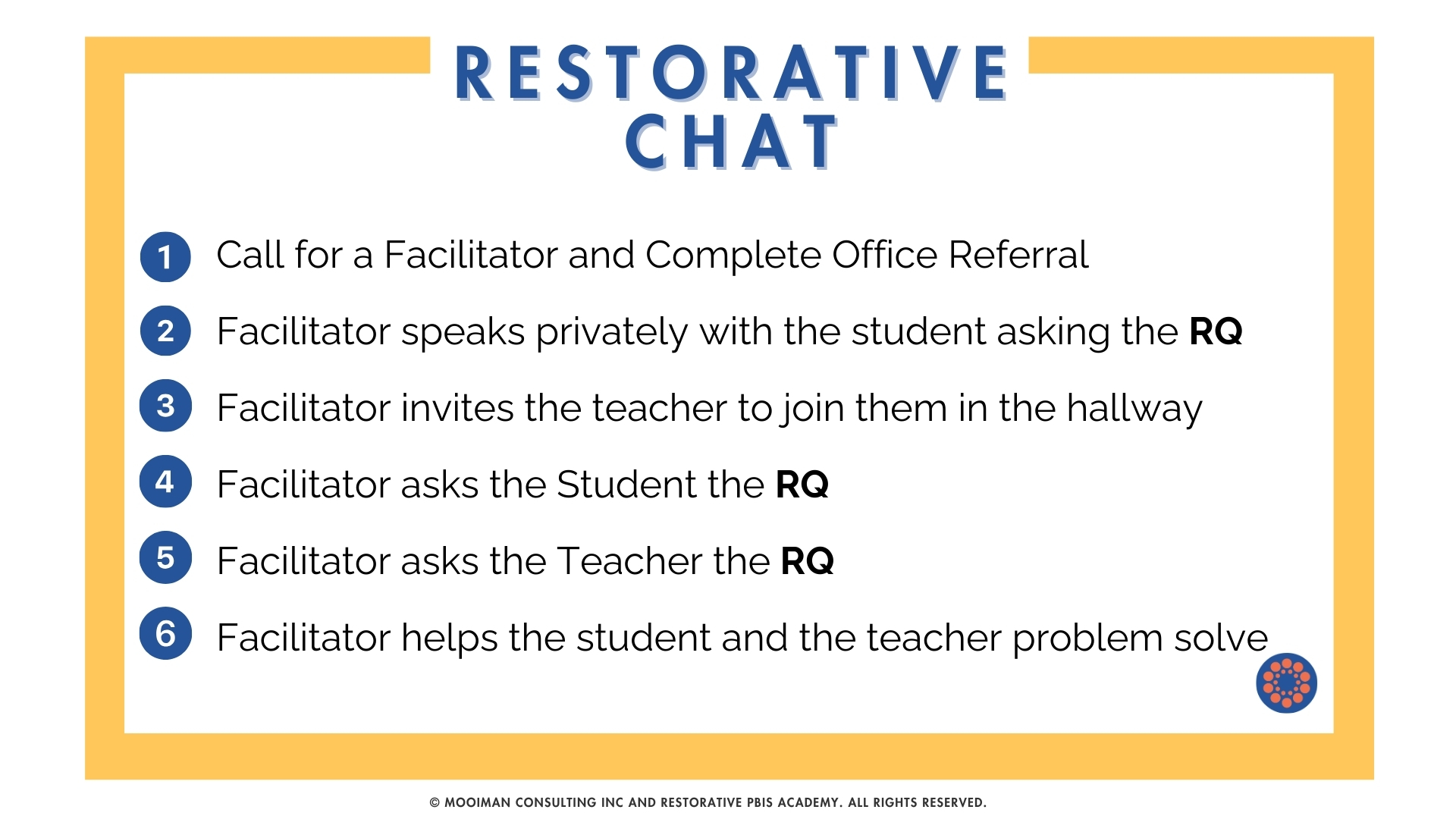
Here’s why this matters.
When students are sent to the office, they often miss 45 minutes to an hour of instruction — walking, waiting, talking, consequences, walking back.
But the bigger issue?
The teacher has no voice.
Their experience isn’t heard.
Their feelings aren’t acknowledged.
Their ideas about fixing the problem aren’t included.
And that weakens the student–teacher relationship.
We can’t repair what went wrong in the classroom without the teacher. So the administrator can only do so much.
Which is why behavior often doesn’t change.
What a Restorative Chat Looks Like
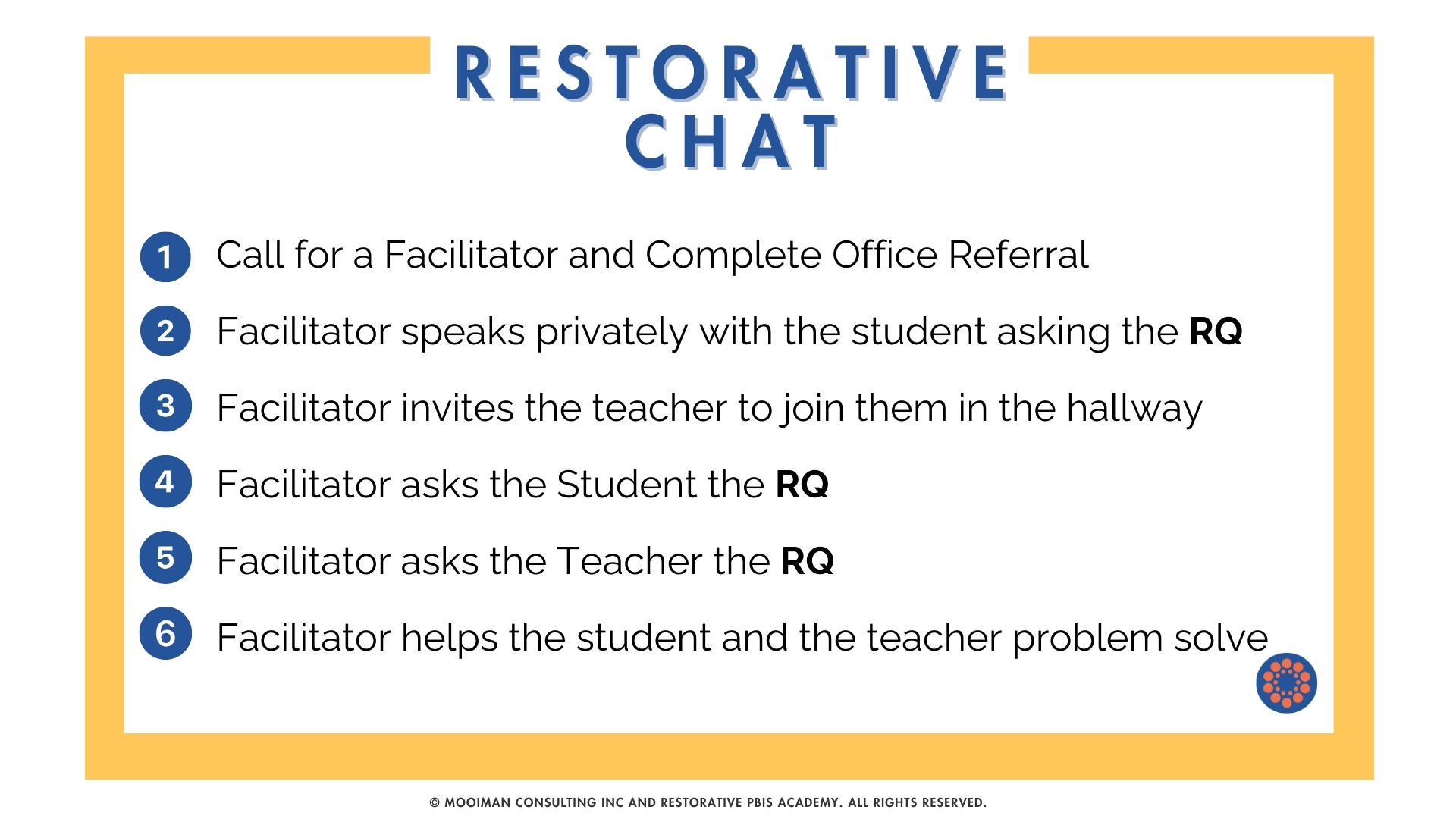
When behavior escalates, a trained facilitator (often an administrator, counselor, or support staff member) comes to the classroom door.
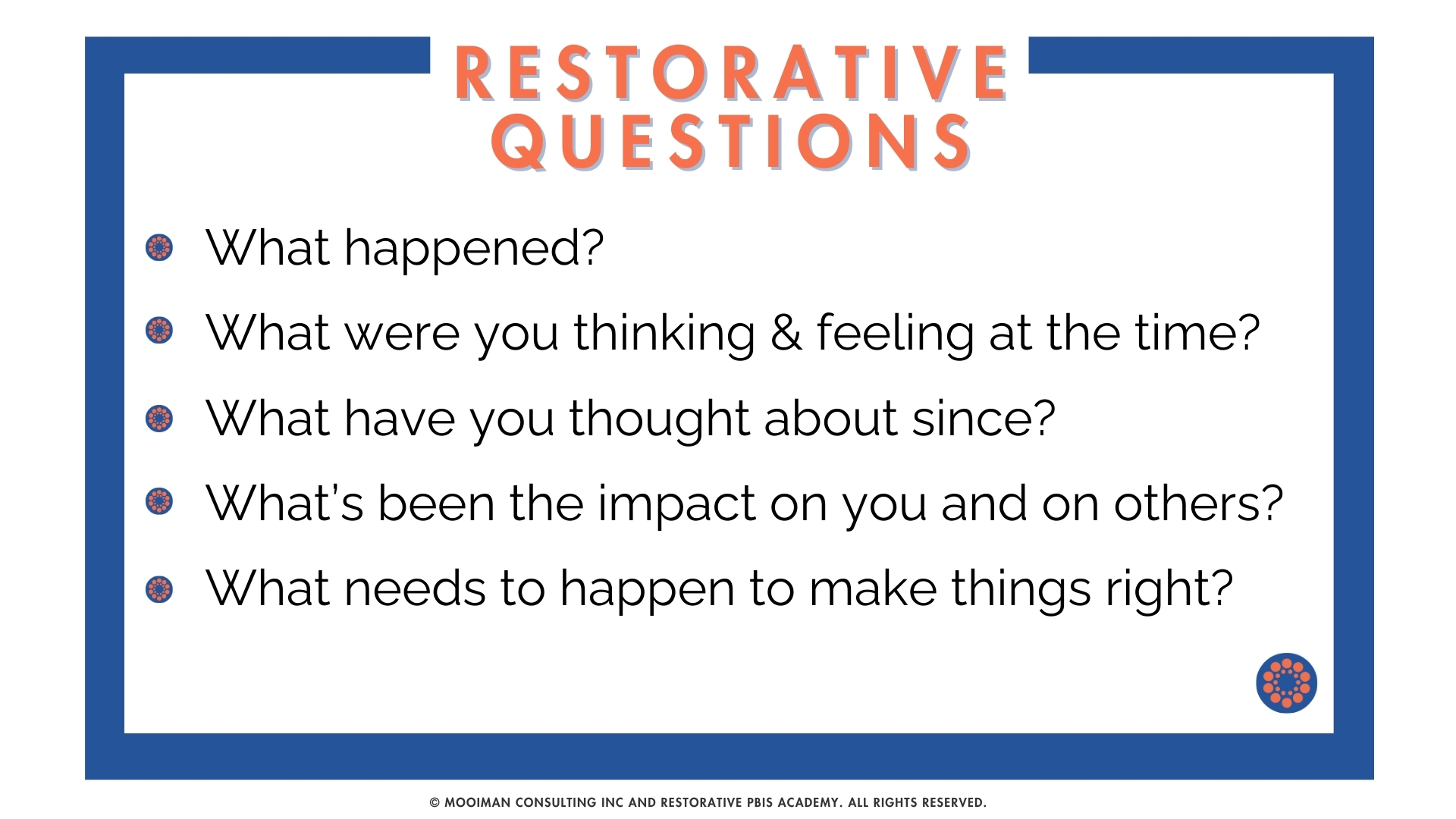
They briefly review what happened and speak privately with the student in the hallway using the restorative questions. If the student is upset, they may take a short walk.
The goal is to help the student:
- Calm down
- Reflect
- Answer restorative questions
- Take responsibility
When the student is ready, the facilitator brings them back and invites the teacher into the hallway.
And this part is critical:
Both the student and the teacher need to be calm.
If necessary, the teacher can say:
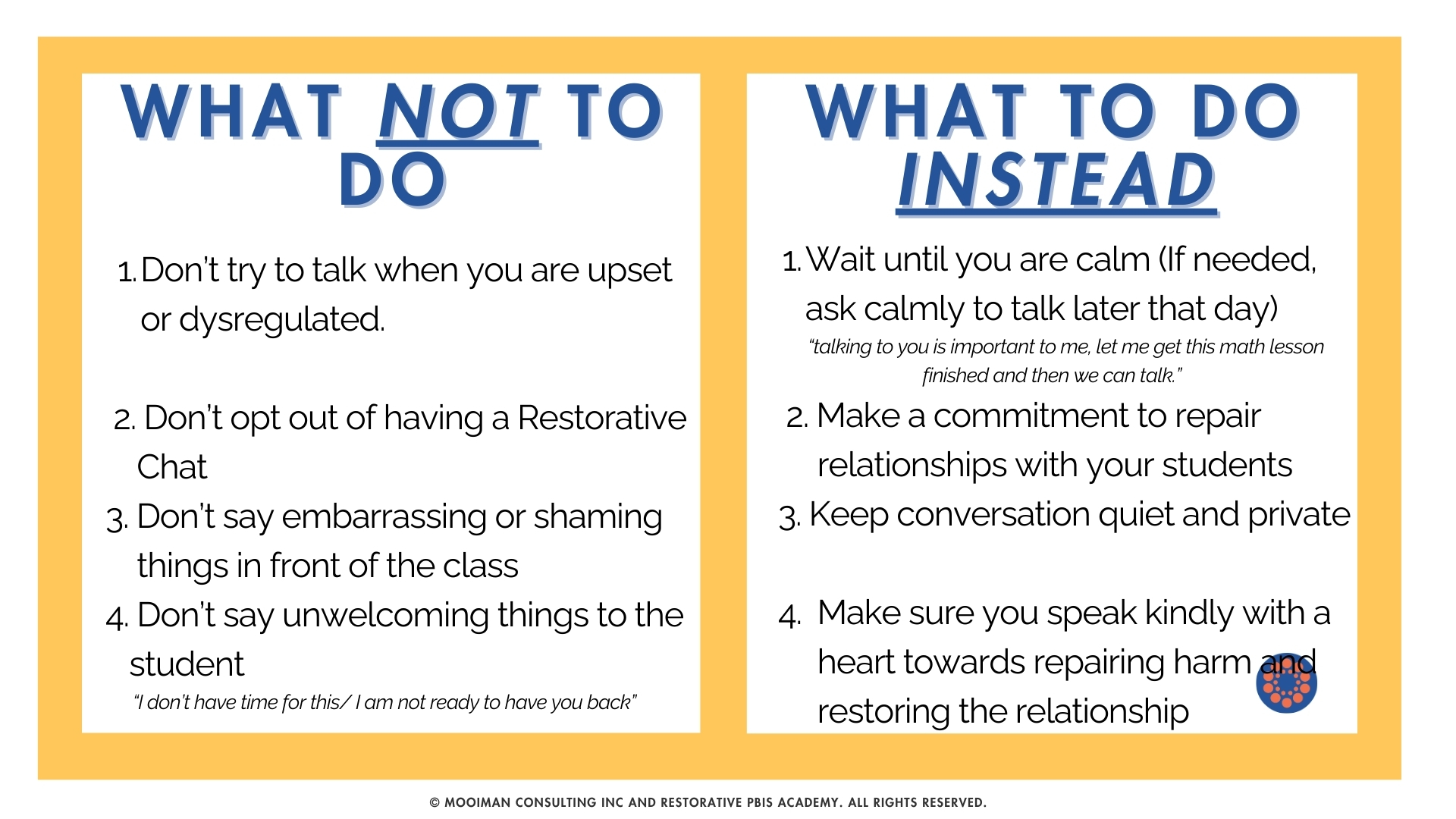
“Talking to you is important to me. Let me finish this lesson and then we can talk.”
That’s not avoidance. That’s wisdom.
Restorative conversations should be quiet, private, and grounded in respect. The goal is
not to win. It’s to repair.
The Missing Piece in Traditional Discipline
During the conversation, the student answers the restorative questions. Then the facilitator asks the teacher the same questions:
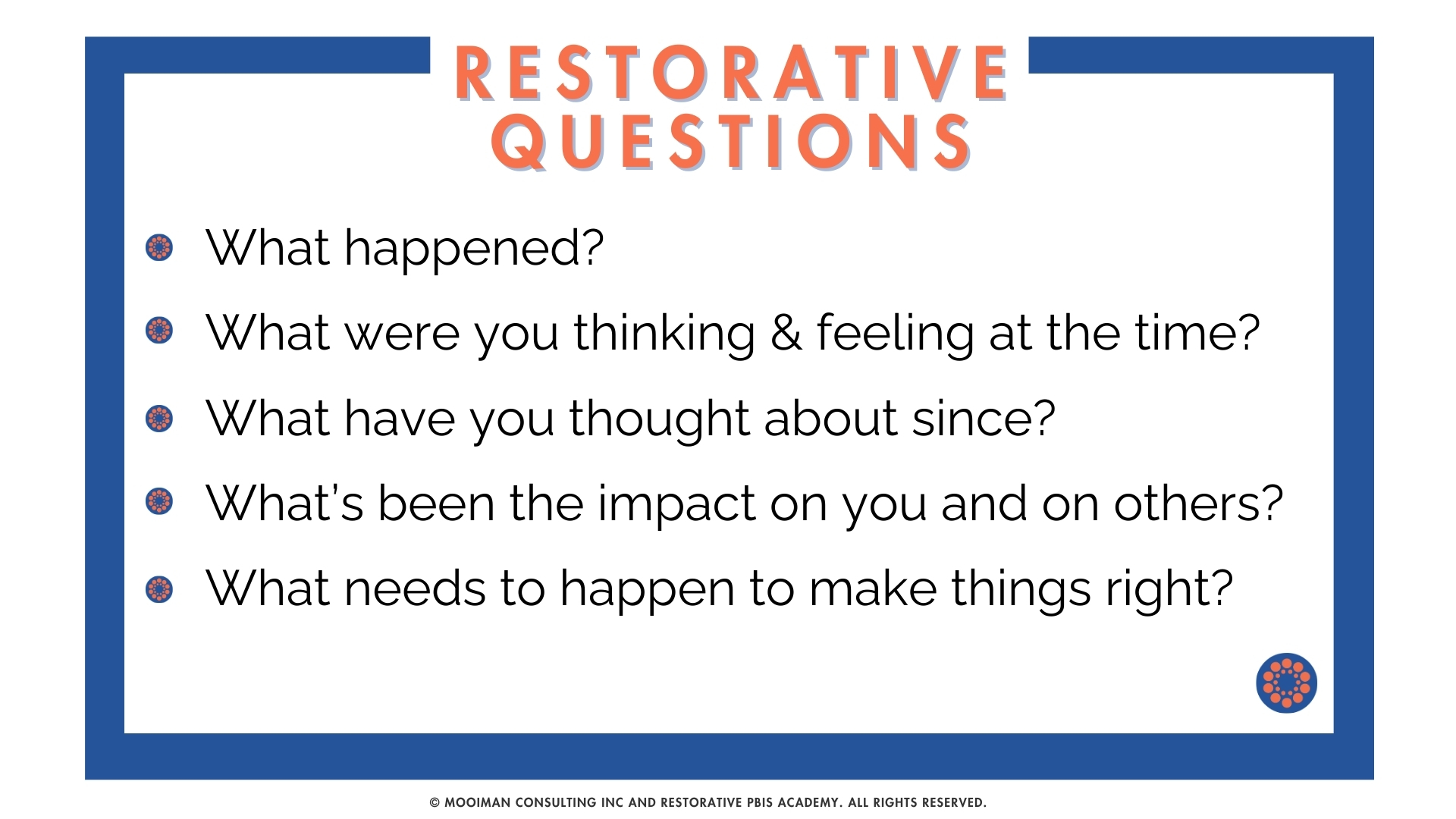
Now the teacher gets to say, calmly:
“When you disrupted the lesson, it was frustrating and confusing.”
Or even:
“When you called me that name, it hurt. I care about you.”
Because teachers are people too.
And when students hear the real impact of their behavior — without yelling, without humiliation, without punishment layered on top — something shifts.
The room softens.
Accountability becomes relational, not transactional.
Repairing Harm (Not Just Assigning Consequences)
Together, the student and teacher problem solve.
Common ways to repair harm might include:
- A sincere apology
- Replacing or repairing something broken
- Helping during break or lunch
- A classroom circle
Sometimes the student suggests a modification.
Maybe they need to sit closer to the teacher.
Maybe they need a private redirection instead of being called out publicly.
Once, a student asked his teacher not to correct him in front of peers because he felt embarrassed. They created a private signal — a phrase only the two of them knew.
That small adjustment changed everything.
In PBIS language, these are classroom modifications.
In restorative language, it’s repairing harm and strengthening relationship.
This Is a Big Shift
Let’s be honest.
We’ve been sending students to the office for over a century.
Changing that system feels radical.
But when you meet students at the classroom door instead of sending them away:
- Teachers feel supported.
- Principals feel more effective.
- Students feel treated with dignity — while still being held accountable.
That’s the power of the Restorative Chat.
If you’re considering making this shift, start small. Train a few staff members. Download the restorative questions for free here. Try it once.
You may find that the most powerful discipline change isn’t sending students away.
It’s staying connected.
Hey!